SSM‑Native Frontier AI for Software‑Driven Systems
Modern software development needs models that understand structure, semantics, and developer workflows. SSM Native is a research initiative at TU Darmstadt building models that generate high-quality software more efficiently.
We develop long-context, sample efficient model with superior length extrapolation capability (at least 32x). We aim for performance parity with transformers while achieving substantial efficiency gains: 10-12x during training, ~20x during inference, and 12-15x higher throughput. We will ensure performance and scalability with sufficient efficiency for local deployments. Our initial focus is secure and correct code generation in software engineering and later extend to wider application across various domains such as Robotics, Digital Circuit Design.
Four interconnected pillars of SSM-native framework
We improve upon our SSM model architecture based on the behaviour of the learned representation of the model. We build SSM architectures that capture code semantics, application structure, developer intent, and repository level context.
We develop models which are highly efficient than the current LLMs. Our model consumes less than 20% of the GPU memory than what current models consume, which makes them ideal for local deployment. Our model provides at least 12-15x faster generation.
Our models connect directly to development workflows via IDE tools, code review assistants, and API generation pipelines. This makes SSM Native useful not just for research, but for real software teams aiming to speed up implementation and reduce cognitive load.
We measure model performance on software production metrics such as correctness, maintainability, and task completion speed. Our benchmarking work validates that SSM Native improves end-to-end software generation, not just token-level accuracy.
Work in Progress
Research outputs from the SSM Native project
Loading publications from BibTeX...
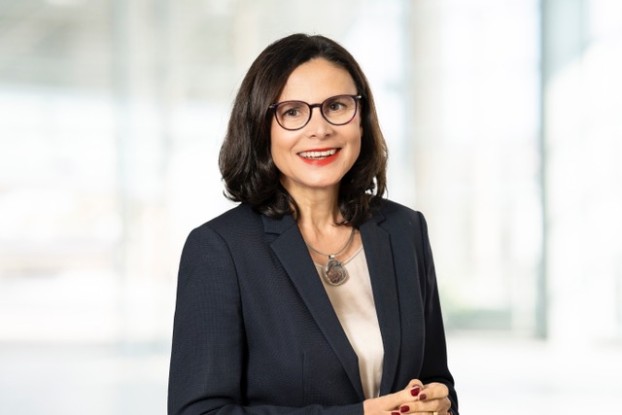
Principal investigators and researchers driving the SSM Native initiative
Programming languages, software engineering, and AI-assisted development with a focus on code correctness and security.